📖 How to Use
🎯 Getting Started
Choose from four common op-amp configurations to analyze and design circuits:
- Inverting Amplifier: Inverts and amplifies the input signal (Av = -Rf/Rin)
- Non-Inverting Amplifier: Amplifies without inverting (Av = 1 + Rf/Rin)
- Summing Amplifier: Adds multiple input signals with independent gains
- Difference Amplifier: Subtracts two input signals (Vout = V2 - V1)
⚡ Saturation Checker
The tool automatically detects when the calculated output would exceed the power supply rails:
- Clipping Warning: Output turns RED when Vout exceeds VCC or VEE
- Waveform Visualization: See how the output signal clips at the supply rails
- Headroom Indicator: Shows available voltage swing before clipping
⚠️ Real Op-Amps: Actual saturation voltage is typically 1-2V below the supply rails
🔌 Power Supply Configuration
Configure your op-amp power supply (VCC/VEE):
- Dual Supply: ±15V, ±12V, ±5V (symmetric around ground)
- Single Supply: +15V/0V, +12V/0V, +5V/0V
- Custom: Any valid VCC/VEE combination
💡 Tip: For single supply operation, use voltage dividers to bias inputs at VCC/2
📐 Unit Prefixes
The calculator automatically handles unit prefixes:
- Voltage: 5V, 12V, 1.5V, 3.3V, ±15V
- Resistance: 1kΩ, 10k, 4.7MΩ, 100Ω
- Frequency: 1kHz, 100Hz, 1MHz (for waveform visualization)
Supported prefixes: k (kilo), M (mega), m (milli), µ/u (micro)
📚 Op-Amp Basics
Ideal Op-Amp Characteristics:
- Infinite input impedance (no current flows into inputs)
- Zero output impedance (can drive any load)
- Infinite open-loop gain (with negative feedback, output follows equation)
- Virtual short between inputs (V+ ≈ V- when using negative feedback)
Golden Rules:
- No current flows into the op-amp inputs (I+ = I- = 0)
- The op-amp will do whatever it can to make V+ = V-
⚡ Power Supply Configuration
🔄 Op-Amp Configuration
🔌 Inverting Amplifier Circuit
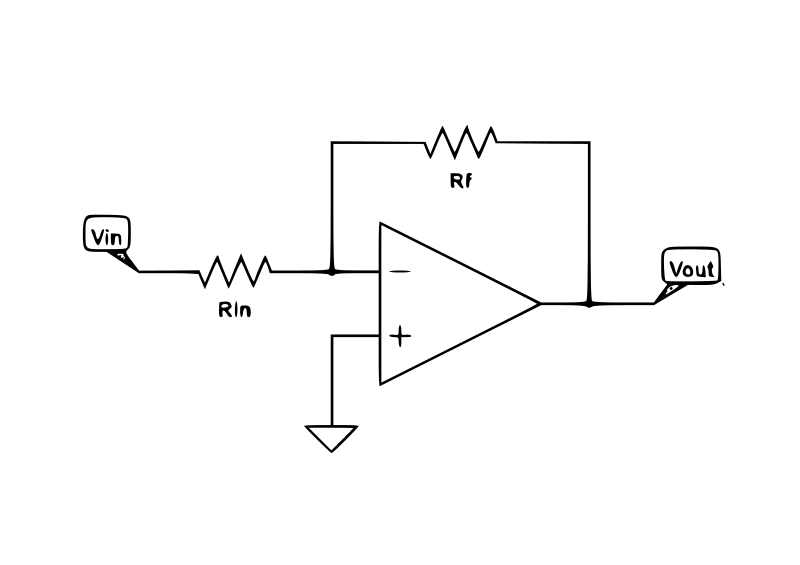
Gain: Av = -Rf / Rin
Output: Vout = -Vin × (Rf / Rin)
🔌 Non-Inverting Amplifier Circuit
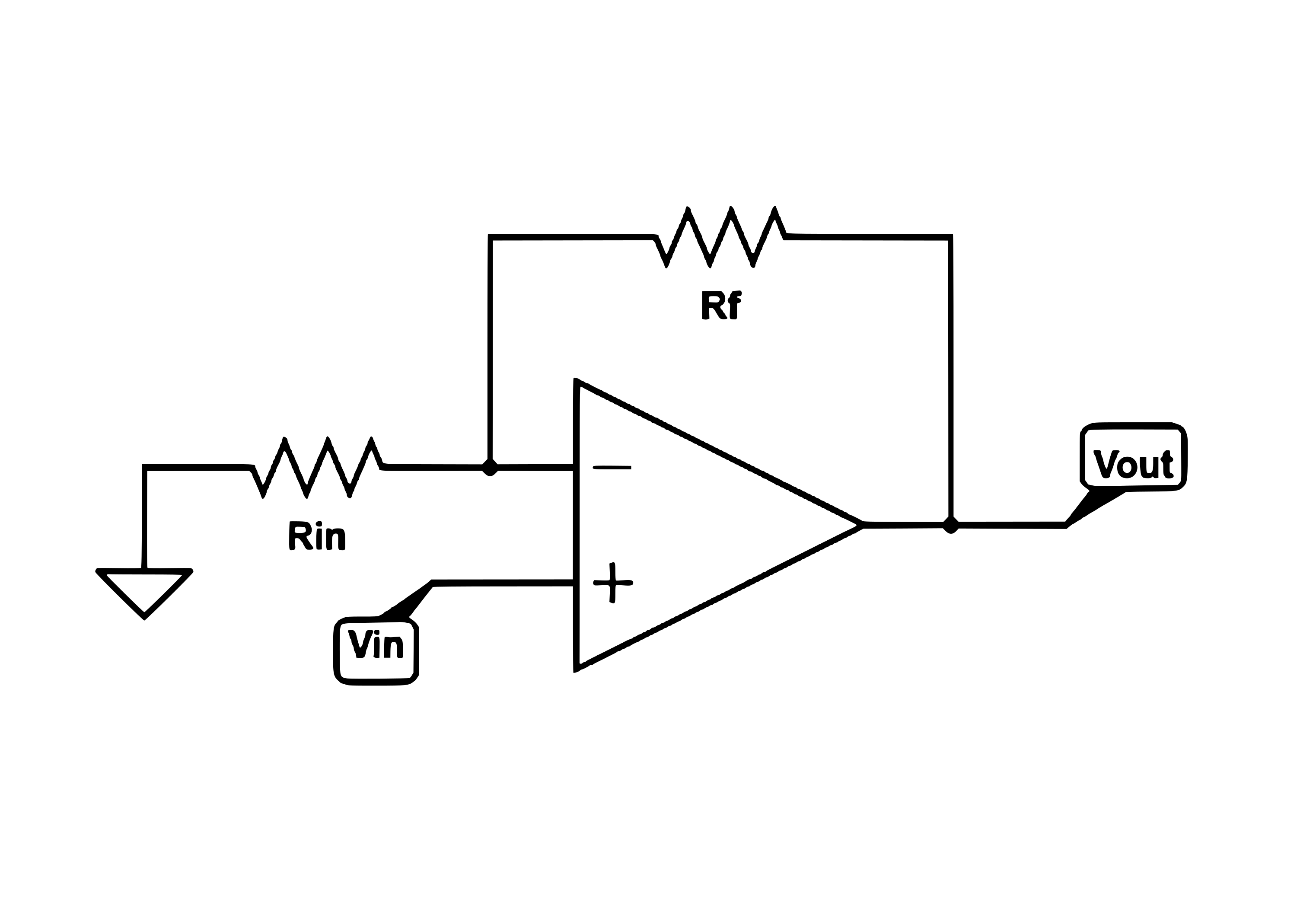
Gain: Av = 1 + (Rf / Rin)
Output: Vout = Vin × (1 + Rf / Rin)
🔌 Summing Amplifier Circuit
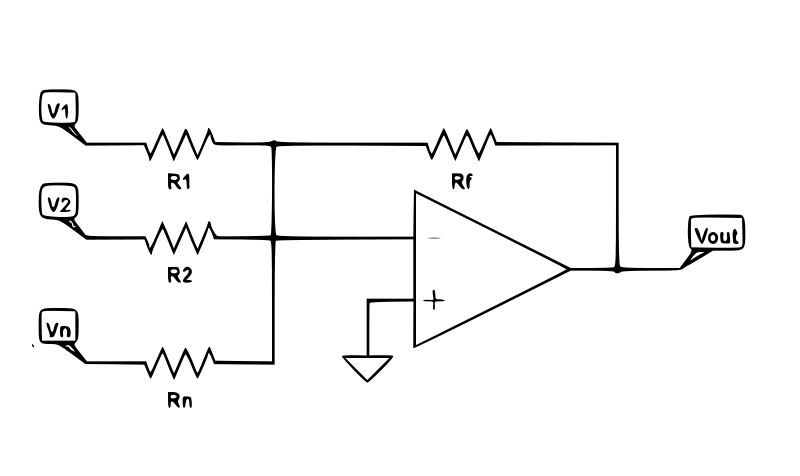
Output: Vout = -(V1×Rf/R1 + V2×Rf/R2 + V3×Rf/R3 + ...)
🔌 Difference Amplifier Circuit
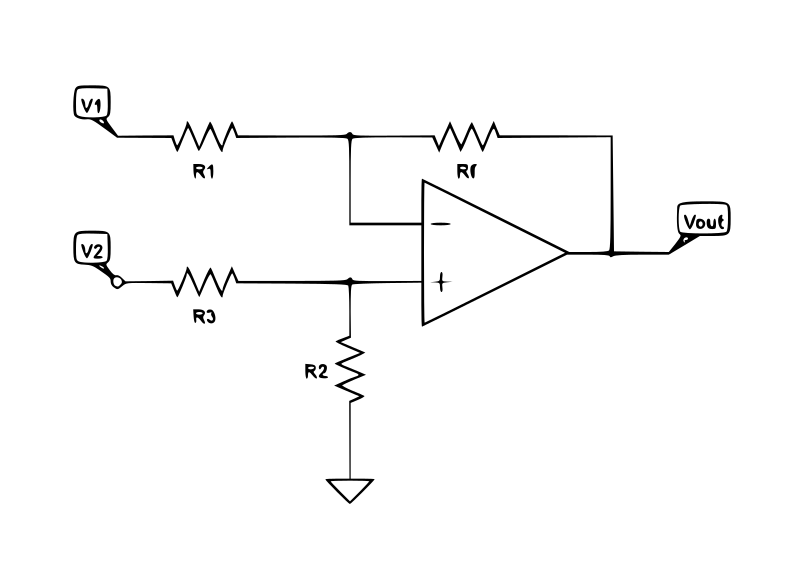
For balanced circuit (R1=R3, R2=Rf):
Output: Vout = (V2 - V1) × (Rf / R1)